A Haunting
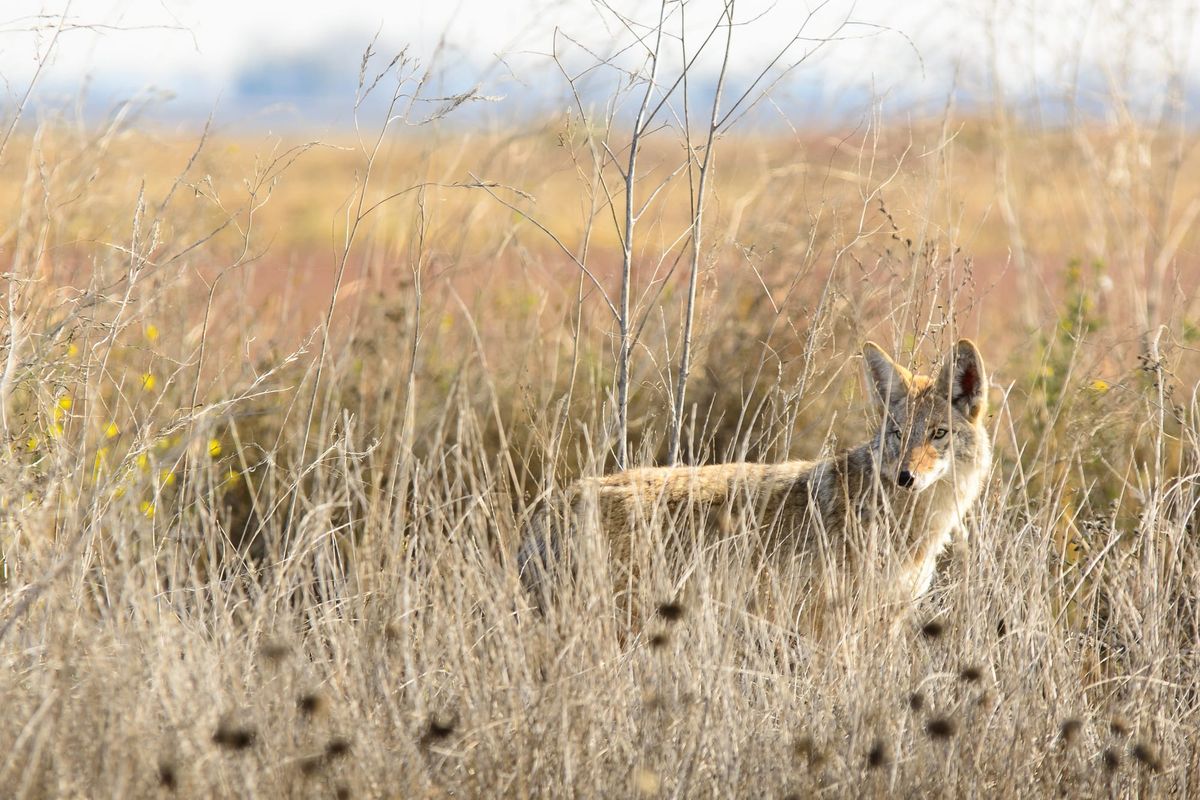
As sunset arrives earlier each day, many Chicagoans have been hearing strange sounds in the spreading dark. You may have heard them yourself: eruptions of sharp half-laughter underscoring the usual city noise, often echoing passing ambulance sirens and cheers from late-season baseball games. While biking past Humboldt Park one evening, I heard it from somewhere deep in the distance. My heart rate shot up, and I felt the familiar thrill of an encounter with the more-than-human. Even in the middle of the city, something wild and strange had taken up residence, and I made a sharp turn into the park to follow the echoes and confirm my suspicions.
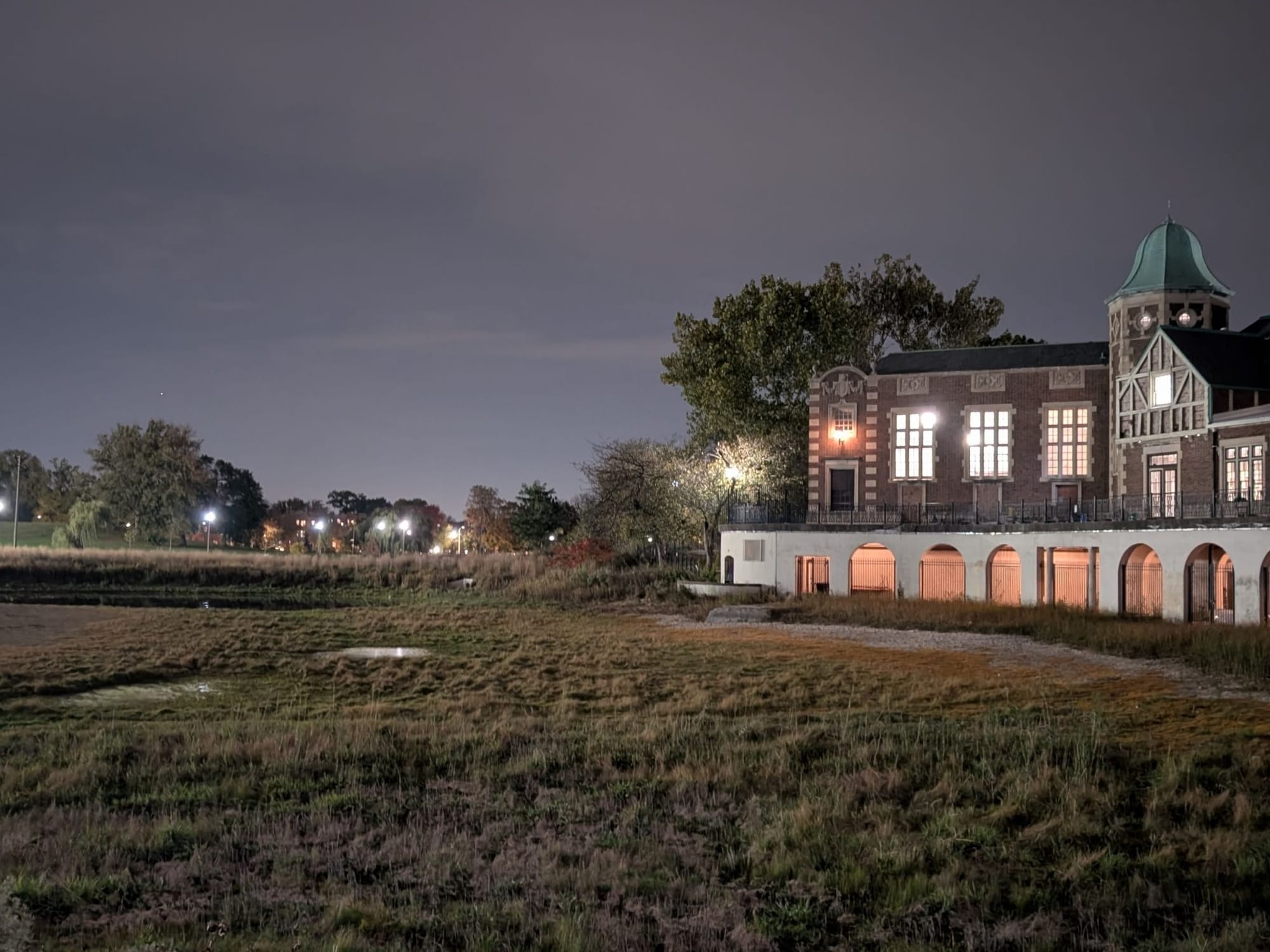
After some circling, I finally spotted the elusive sources in the distance: a pack of coyotes slinking from the Natural Areas through the drained lagoon by the field house, which two months before had been a busy swimming beach. Most likely this was a family with spring pups that were nearly full-grown, entering the autumn dispersal season when they will split off for good. Throughout most of the year you will never see coyotes as they pass through the city unnoticed, so this was a rare opportunity.
Humboldt Park is a fitting place for such a haunting. Originally called “North Park,” it was renamed by the West Side’s German community for Alexander von Humboldt, a Prussian naturalist who championed the novel idea of nature as a web of life: an interconnected whole where no single part can be understood in isolation. Decades later, landscape architect Jens Jensen used the park as a laboratory for the “Prairie Style,” using naturalistic landforms and native plants in an attempt to evoke the grasslands that the city had replaced. Jensen added a “prairie river” to connect the artificial lagoons, built to look like a stream winding through grassland. Even the small formal gardens are guarded by two bronze bison statues, cast from models made for the 1893 World’s Fair, long after bison had been last seen in the region. Over time, this park was built into an image of the prairie, filled with its ghosts.
With that in mind, the coyote (Canis latrans) may not have been invited, but it cannot be called an intruder here. Early settlers called them “prairie wolves,” illuminating their origins in the vast grasslands of the Midwest. Their lineage stretches back to the Ice Age: Pleistocene coyotes were bigger, heavier-jawed creatures that likely preyed on young horses, camels and even bison, competing with similarly massive dire wolves. When that megafauna collapsed at the end of the Ice Age, coyotes shrank their bodies to fit the shrinking world around them.
Over the last two centuries, coyotes have adapted once again. As gray wolves were wiped out across much of the continent during colonization, coyotes experienced “mesopredator release”: with the apex predators gone, this mid-sized hunter was free to fill the vacancy. Despite widespread campaigns to hunt and poison them to extinction, they managed to spread into every state in the contiguous US, picking up wolf and dog genetics along the way through hybridization. The eastern coyote that emerged is larger than its western ancestors: a novel creature created by disturbance, uniquely adapted to the world we have made. Today an estimated 1,700 coyotes live in Chicago, thriving mostly out of sight, dubbed by researcher Stan Gehrt “the ghosts of the city.”
While highly adaptable, these modern coyotes are doing heavy lifting in their chosen niche, and they still require a usable habitat: not only for cover and denning space, but to support the food web they depend on. Despite their reputation as trash-raiders and chicken-stealers, they primarily eat what a wild prairie would provide. When the Urban Coyote Research Project analyzed more than 1,400 local coyote scats, small rodents turned up in 42% of them, fruit in 23%, deer in 22%, and rabbits in 18%. Garbage or pet food appeared in under 2%, and cats in only about 1%. Habitat isn’t only about flowers and pollinators: a working food web has a top, and in Chicago that top is the coyote.
This brings us back to Humboldt Park’s Natural Areas. Here, volunteers tend native plants and remove invasive species, rebuilding the layered plant community that everything else depends on. This work doesn’t feed coyotes directly; it feeds the base of the food web: the insects, rodents and rabbits that coyotes hunt. Every layer moves energy upward through the web of life.
Knowing that everything is connected, pest control becomes one of our greatest responsibilities in managing the effects of urbanization. Chicago’s main weapon in its long war on rodents has been baits made from anticoagulant rodenticide, which kills by internal hemorrhaging. This poison doesn’t stay in the rat; it is taken up into the body of whatever eats it. It moves through the web, poisoning owls, eagles, stray cats and coyotes alike. In some cities, nearly every urban coyote tested showed exposure to these chemicals.
Luckily, there are possible alternatives. Since spring of 2025, the Wicker Park–Bucktown Special Service Area has placed a rat contraceptive in bait boxes throughout the neighborhood. It doesn’t kill rats; it targets their fertility. Early results were promising enough to expand the program, and the manufacturer now reports a steep drop in rat activity over the first year of the pilot. None of this works without the basics, though: rats thrive in cities because we keep feeding them, and securing trash is the foundation of effective rat control.
But the main lesson is, as usual: build it and they will come. A backyard prairie won’t summon a top predator (nor should it: a coyote that keeps its distance is doing exactly what it should), but the insects, mammals and birds that form the rest of the regional food web will flourish there, supporting in turn the coyotes that drift through Chicago’s liminal spaces. We can make a real impact in even the smallest ways, adding our small drop to the ocean of habitat that feeds food webs in real time. Standing stems house the insects that feed birds and small mammals. Seedheads and fruiting shrubs provide winter food, and clumps of native grass provide cover. Crucially, sealing up trash and choosing kill traps or non-toxic options over rodenticide bait keeps the food web clean.
The coyotes will leave the lagoon before snow arrives, and next summer human families will be swimming where the coyotes once passed by. But beneath their feet, the old web keeps working. This prairie wolf has survived the Ice Age, colonization, and a century of poisons. It doesn’t need us to save it; it only needs us to learn to co-exist, in whatever small ways we can. On these cold autumn nights, when an ambulance passes by and something much older answers, take a moment and try to listen.